Cheese and Spinach Ravioli
Makes thirty-two 2-by-2½-inch (5 by 6 cm) ravioli
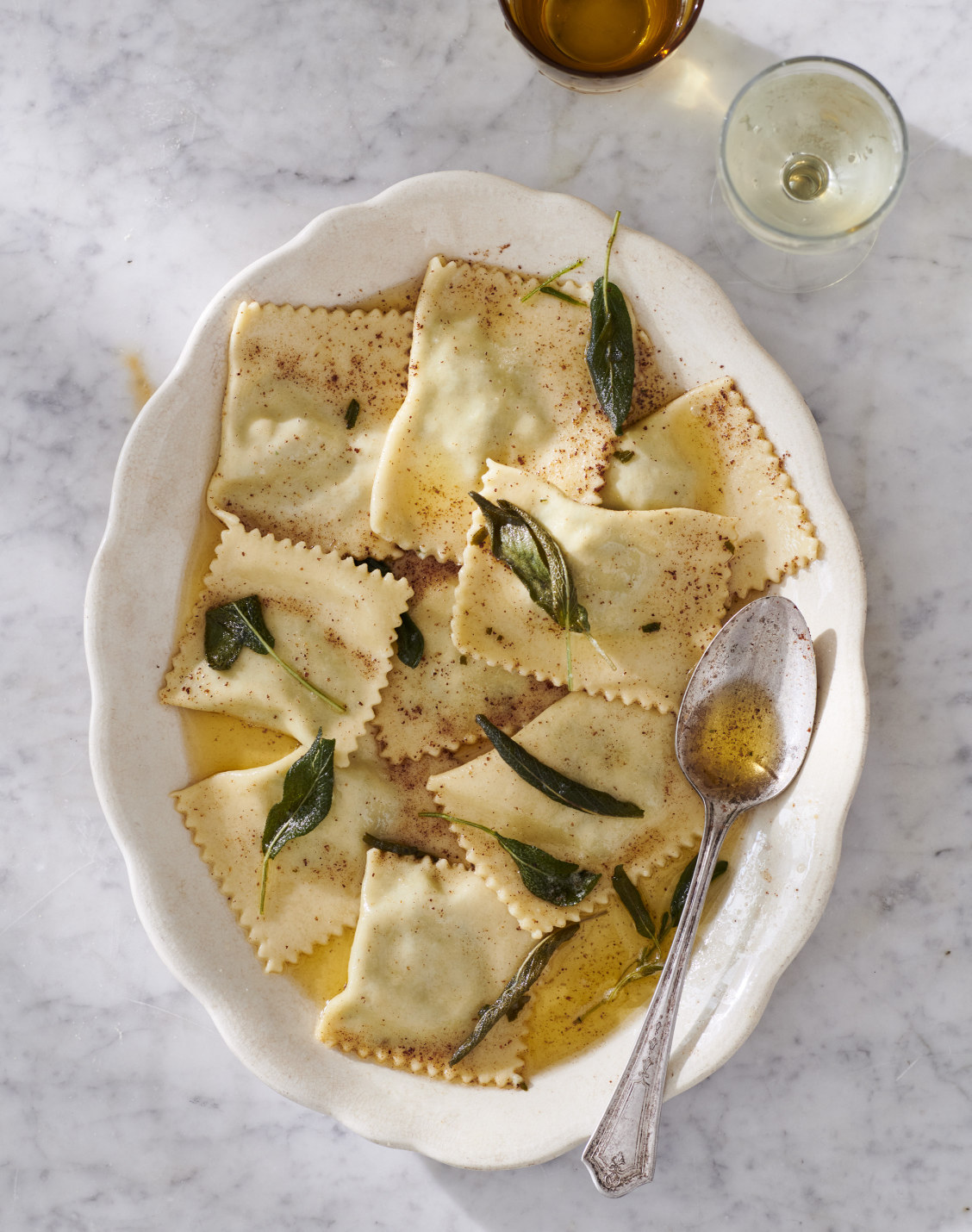
Pasta stuffed with cheese and meat has been a common dish in some form since before the Italian Renaissance. In America, ravioli quickly became a popular mainstay of red sauce meals as an inexpensive yet hearty way to feed the family (although one with increased work for mamma) or was served as one course in a larger meal. In the 1930s, after canned food entered the mass market, its popularity exploded when immigrant Italian chef Ettore Boiardi pioneered canned cheese ravioli in tomato sauce—sold under an easier-to-pronounce name, Chef Boyardee. Serve the ravioli in the tomato sauce or, alternatively, in a butter and herb sauce; see the Variation below.
The filling is multi-use; you also stuff shells, cannelloni, or manicotti with it; layer it into lasagna; or dollop it around baked ziti. Any leftover filling can be frozen for up to 6 months.
INGREDIENTS
- 8 ounces (230 g) fresh greens, such as spinach, chard, dandelion, or escarole, washed and trimmed
- 1 cup (250 g) ricotta cheese, homemade or store-bought
- 1/3 cup (50 g) grated Parmesan or Romano cheese
- 1 large egg
- ½ teaspoon kosher salt, or more to taste
- ½ teaspoon freshly ground black pepper, or more to taste
- Hefty pinch each of cinnamon and sugar (optional)
- 1 recipe Basic Pasta Dough
- 1 recipe Tomato Sauce
DIRECTIONS
- Steam the greens in a covered pot with a little water until tender, 5 to 8 minutes, depending on the choice of green. Drain and let cool slightly, then squeeze out as much water as possible and chop the greens (you should have about 1 cup/165 g).
- Transfer to a bowl and mix in the ricotta, grated cheese, egg, salt, pepper, and cinnamon and sugar, if using. Taste for seasoning, adding more salt and/or pepper if needed. (The filling can be made ahead and refrigerated, covered, for a day or two.)
- Cut the dough into quarters. Press each piece into a small rectangle of even thickness; work with one piece of dough at a time, keeping the remaining pieces covered. Lightly flour a baking sheet; have extra flour nearby to use sparingly for your hands and work surface. Have ready clean kitchen towels or sheets of parchment paper to separate the pasta sheets.
- Be sure to read this paragraph and the following one thoroughly before proceeding. Set the rollers of a pasta machine at their widest setting and roll one piece of dough (starting from a narrower side) through the rollers. Repeat on successively higher numbers until the dough is thin but not transparent (probably 3 more rolls). Before the final roll, the dough sheet should be 12 inches (30 cm) long. Cut it in half and roll each half through the machine again on the second-thinnest setting. Each sheet should still be approximately 12 inches (30 cm) long, but this doesn’t have to be exact! Arrange the sheets side by side on the floured baking sheet and cover with a towel or parchment paper. The pasta sheets can also be hung over string (like a clothesline) to rest. Repeat with the remaining pieces of dough, separating the layers as you add more sheets, for a total of 8 sheets of dough.
- Lightly fold one sheet of dough lengthwise in half to make a crease (this will give you a line guide to work with), then unfold it onto a floured work surface. Drop heaping teaspoonfuls of the filling side by side across the bottom half of the dough about 2½ inches (6 cm) apart, leaving a border at each end, to create 4 ravioli. Fold the top half of the dough over and press firmly with your fingers all around the 3 unfolded edges and around the mounds of filling. Using a ravioli cutter or knife, cut the dough into rectangles approximately 3 by 2 inches (7.5 by 5 cm). (This doesn’t have to be an exact process! Any scraps can be cooked separately like pasta noodles.) Place the filled ravioli on a floured baking sheet. Repeat with the dough and filling.
- Bring a large pot of water to a boil and salt it generously. Rewarm the tomato sauce in a large pan. Add the ravioli to the boiling water and cook until they float to the top, 4 to 5 minutes. Lift out with a slotted spoon and add to the warm sauce.
- Serve 4 to 5 ravioli per bowl, with more sauce spooned on top and some grated cheese sprinkled on top. Any extra uncooked ravioli can be stored in an airtight container in the refrigerator for up to 2 days or in the freezer for up to 6 months.
PANTRY
Need help with the ingredients? Check our pantry list:
cook's note
Variation: For a quick butter sauce, melt and sizzle butter with fresh sage or whatever hearty herb you have on hand (fresh thyme or oregano sprigs or a bay leaf from the cupboard) along with a few garlic cloves or slices of onion. Slide the cooked ravioli into the pan, add a little of the pasta water and a squeeze of lemon, and serve.
Since most of us don’t have a large enough workspace to fill all the dough sheets at the same time, this recipe has you roll the dough one quarter at a time to fill and shape it. But if your surface is big enough, roll all the dough, then fill at the same time, completing the whole task at once.