Prosciutto Bread
Makes two 12-inch (30 cm) round loaves
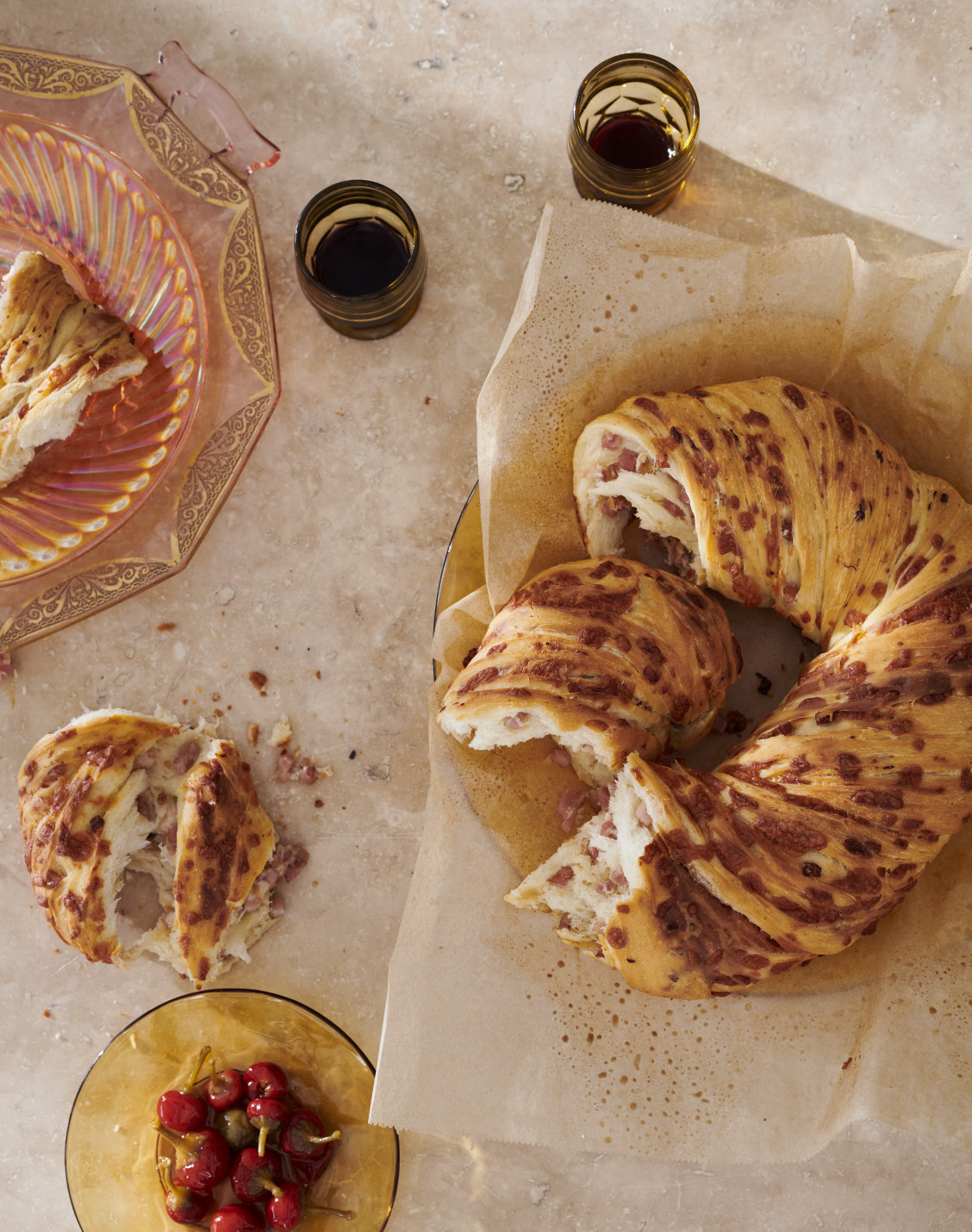
Prosciutto bread, aka lard bread, aka Brooklyn street bread, grew out of the Italian communities clustered around New York City, New Jersey, and Philadelphia. It traces its roots back to the cucina povera of southern Italian peasants, which made use of the leftovers after the butchering of a pig. The lard was rendered down and used for cooking, and the crispy little leftover bits were folded into the bread known as pane con ciccioli (meaning crisped fatty pork). As its preparation evolved in the New World, the name of the bread changed according to the local dialect—for example, it became “cigola bread” in North Jersey. But the more appealing name prosciutto bread has stuck to this day. This was originally a Christmas or Easter treat, but one friend remembers it on her grandmother’s table at every Sunday dinner as a part of her antipasto spread. A handful of regional bakeries still consistently churn out dozens of loaves every day, and thousands on holidays.
INGREDIENTS
- 5 cups (625 g) all-purpose or bread flour, plus more for dusting
- 1 tablespoon kosher salt
- 2¼ teaspoons (7 g) active dry yeast (from a ¼-ounce packet)
- 2 teaspoons sugar
- 2 cups (475 ml) water
- 2 tablespoons extra virgin olive oil, plus more for brushing
- 6 to 8 ounces (175 to 225 g) prosciutto in one piece (or a combination of salamis), cut into ¼-inch (0.65 cm) cubes (1½ cups cubed)
- 1½ teaspoons freshly ground black pepper
- 5 ounces (140 g) provolone cheese, grated (optional)
DIRECTIONS
- In a large bowl, or the bowl of a stand mixture, whisk together the flour, salt, yeast, and sugar. Add the water and olive oil and stir to combine the wet and dry ingredients.
- Knead by hand, or fit the mixer with the dough hook and knead on low speed for 5 minutes (a few more minutes if working by hand). Add the prosciutto, pepper, and cheese, if using, and continue to knead to incorporate the add-ins, about 2 minutes. The dough will be sticky but workable. Dust flour on your hands and the work surface as needed. Use a bench scraper to assist you.
- Turn the dough out and form it into a tight ball (gathering up any loose meat and cheese). Transfer it to a large oiled bowl and turn to coat with oil. Cover tightly and let rise at warm room temperature until almost doubled in size (it should leave a fingerprint behind when pressed), 3 to 4 hours.
- Line 2 large baking sheets with parchment paper. Divide the dough into 2 pieces. Roll one piece out into a 24-inch-long (61 cm) rope, twisting the “rope” as you go, and form it into a circular wreath shape; pinch the ends together to seal. Transfer to one of the lined baking sheets and repeat with the second piece of dough, transferring it to the second lined baking sheet.
- Lightly cover the dough and let rise in a warm place until one-third larger in size (it will leave a fingerprint behind when pressed), 60 to 90 minutes.
- Position a rack in the center of the oven and preheat the oven to 500°F (260°C). Place a pan of water on a lower oven rack. (If your oven cannot accommodate both baking sheets on a single rack, position racks in the top and middle of the oven and set the pan on the bottom of the oven.)
- Bake until the breads are golden brown and cooked through, 15 to 20 minutes. Transfer to a wire rack and let rest for at least 10 minutes before slicing and serving.
- This bread is best eaten fresh on the day it is baked, but it can be wrapped tightly in plastic wrap and frozen for up to 6 months. Thaw at room temperature.
PANTRY
Need help with the ingredients? Check our pantry list:
cook's note
In the cooler months, find a warm spot for the dough to rise, such as on top of a warm oven or near a radiator in the warmest room in the house. Or heat the oven to 200°F (90°C) for a few minutes, then turn it off and place the dough in it to rise. On a warm day, the countertop will do just fine.