Seven Fishes Seafood Stew (Cioppino)
Makes 6 to 8 servings
Cioppino, a spicy tomato-based fish and shellfish stew, is likely San Francisco’s most famous dish from its Italian American history. By the mid-nineteenth century, well before the mass migration onset of 1870, North Beach was home to northern Italian gold seekers, agriculturalists, and artists. By 1880, though, the region’s economy was dominated by Sicilian and other southern Italian fishermen and oystermen who plied their trade alongside the Ligurians from farther north aboard small boats and large fleets in San Francisco Bay and the deep-sea Pacific beyond. Filbert Street Wharf, the original Fisherman’s Wharf, was then known as Italy Harbor. When fishermen returned home with extra seafood from the day’s commercial catch, their wives cooked it with tomato sauce in simmering pots over open fires on Telegraph Hill. Crabs and squid were especially plentiful and cheap.
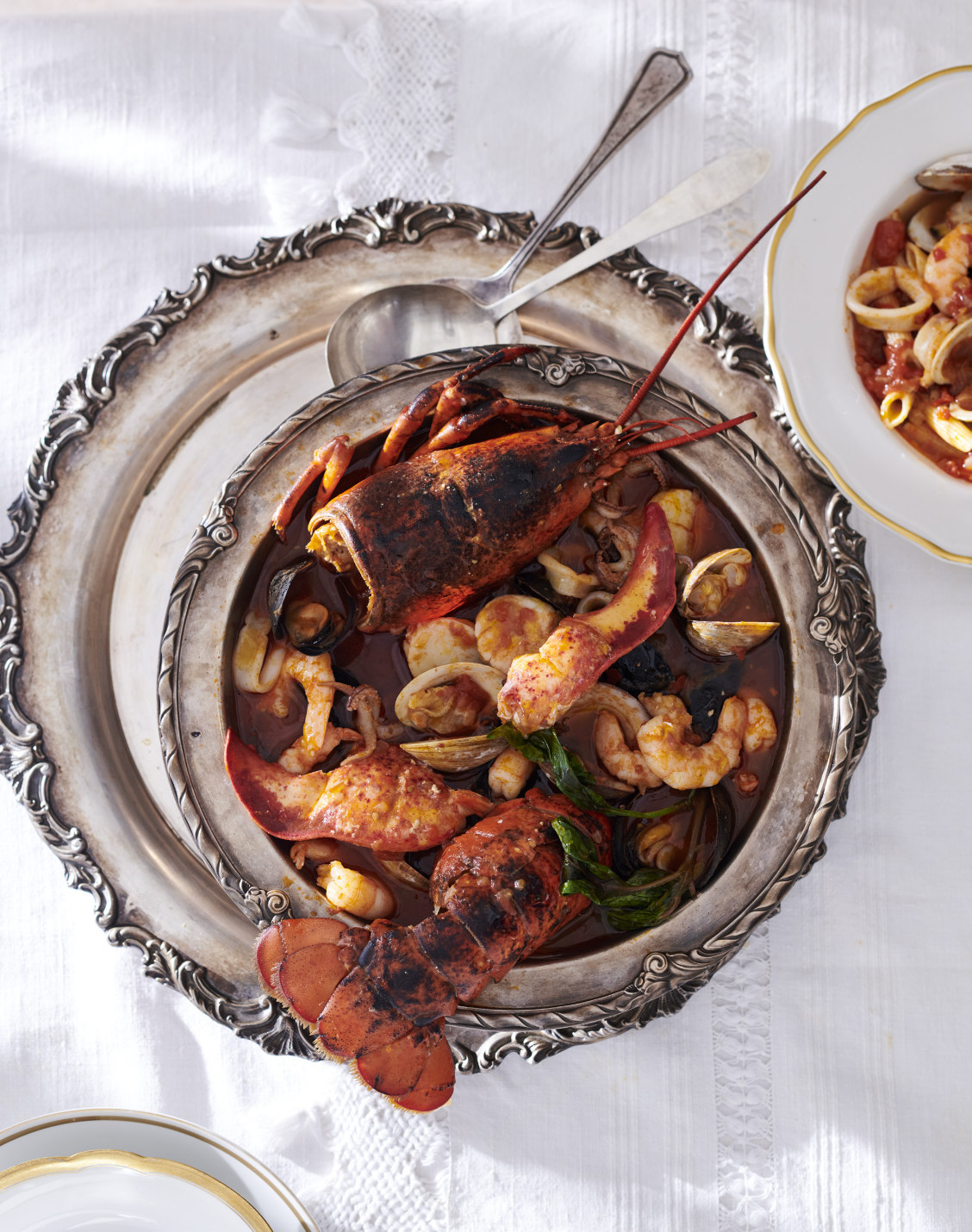
Nowadays this brothy dish is celebratory one, chock-full of seafood. It comes together quickly just before serving if the seafood has been cleaned and the spicy-rich tomato broth has been made in advance. Then all that’s left is a 10-minute simmer to finish. Part of the fun of eating cioppino is the surprise that every bite brings, with so many different textures and tastes from the sea. This dish is an excellent addition to the Christmas Eve Feast of the Seven Fishes, or it may even be the feast itself if served with macaroni and sourdough bread.
INGREDIENTS
- Two 1-pound (455 g) live lobsters
- About ½ cup (120 ml) extra virgin olive oil
- 2 shallots, minced
- 1 cup (120 g) finely chopped onion
- 8 garlic cloves, minced
- 2 anchovies
- 2 preserved Calabrian chilies, minced, or 1 tablespoon Calabrian chili paste or 2 teaspoons red pepper flakes
- 2 tablespoons tomato paste
- ¾ cup (180 ml) white or red wine
- 4 cups (950 ml) canned whole tomatoes (from about one and half 28-ounce/800 g cans), finely chopped or pureed
- 8 fresh basil leaves
- 1 pound (455 g) ridged penne pasta
- 12 cockles, Manila clams, or small little necks, cleaned (see Aspetta, page 93)
- 12 small mussels, cleaned (see Aspetta, page 93)
- 1 teaspoon dried oregano or 1 sprig fresh oregano
- 8 ounces (230 g) monkfish or other firm-fleshed white fish fillet, cut into 2-inch (5 cm) chunks
- 8 ounces (230 g) sea or bay scallops (cut sea scallops in half if using)
- 8 ounces (230 g) rock shrimp or small shelled shrimp
- About 5 ounces (140 g) cleaned squid, bodies cut into thin rings, tentacles cut into bite-sized pieces
- Kosher salt
- Warmed sourdough bread for serving
DIRECTIONS
- Pour 1 inch (2.5 cm) of water into a large pot with a tight-fitting lid and bring it to a boil. Add the lobsters, cover, and steam for 13 minutes. Remove the cooked lobsters and let cool slightly, until you can handle them. Strain the broth through a cheesecloth or kitchen towel–lined sieve set over a bowl and reserve it. Remove the lobster meat from the tails, claws, and knuckles; reserve all the shells. Let the meat cool, then cover and refrigerate.
- Heat a medium pot over high heat and swirl in 3 tablespoons of the olive oil. Add the shallots and the reserved lobster shells, stirring to coat them in oil, and cook until the shallots are translucent, about 3 minutes. Add the lobster broth and enough water to cover, bring to a simmer, and simmer for an hour or two (the longer, the better, for deeper flavor).
- Strain the lobster broth through a cheesecloth- or kitchen towel–lined sieve into another pot and discard the solids. Simmer the broth to reduce it to 4 cups (950 ml). (This can be done up to 1 day in advance; store the broth in a sealed container in the fridge.)
- Heat a large pot over medium-high heat and swirl in ⅓ cup (80 ml) olive oil. Add the onions and cook slowly until lightly golden, 6 to 8 minutes; add the garlic in the last 2 minutes. Stir in the anchovies, chilies (or chili paste or flakes), and tomato paste and cook, mashing the anchovies into a paste as they cook and scraping the bottom of the pot, a couple of minutes.
- Add the wine, stirring to deglaze the pot. Add the tomatoes, the reserved lobster broth, and the basil and bring to a boil, then reduce the heat to low and simmer until the sauce is slightly reduced, about 30 minutes. (The brothy sauce can be made up to a day in advance, covered once cool, and refrigerated. Return the sauce to a clean pot and bring to a simmer when ready to serve.)
- Meanwhile, about 20 minutes before cooking, remove all the raw seafood from the refrigerator and place on a platter to bring to room temperature. Cut the lobster meat into large bite-sized pieces (leave small claws whole).
- Bring a large pot of water to a boil. Salt the water generously, add the penne, and cook until 2 minutes shy of the package instructions; the pasta should be slightly soft but with a firm chew to it. Drain the noodles, transfer to a bowl, toss with a little olive oil, and cover to keep warm.
- Submerge the clams, mussels, and oregano in the simmering tomato sauce. After 3 minutes, add the monkfish and cook for 5 minutes. Carefully fold in the scallops, rock shrimp, and cooked lobster and simmer for 2 minutes. Add the squid and stir gently for about 1 minute. Turn off the heat and season the sauce to taste with salt. It should be slightly spicy; add more chili if necessary.
- To serve, divide the penne among warmed serving bowls and ladle the stew over the top, including some of each type of fish/seafood in each portion. Drizzle with olive oil and serve immediately, with warm bread.
PANTRY
Need help with the ingredients? Check our pantry list:
cook's note
Use local ingredients for this dish if possible: Choose shellfish and seafood from waters close to you. On the East Coast, lobsters are more affordable and available than the original Dungeness crab but deliver similar satisfaction. This recipe combines seven different types of shellfish and fish, but you should use any combination available to you, substituting in equal weights or volume. Try to include at least one flavor-rich crustacean such as lobster, shrimp, or crab.
If you want to use Dungeness crab instead of lobster: Replace the lobster with a 2-pound (910 g) crab, cleaned and cut into pieces, and add to the pot along with the clams and mussels. Replace the homemade lobster broth with 4 cups (950 ml) fish stock from a good seafood market.