Green Minestrone
Makes 4 quarts (3.8 L); 6 to 8 servings
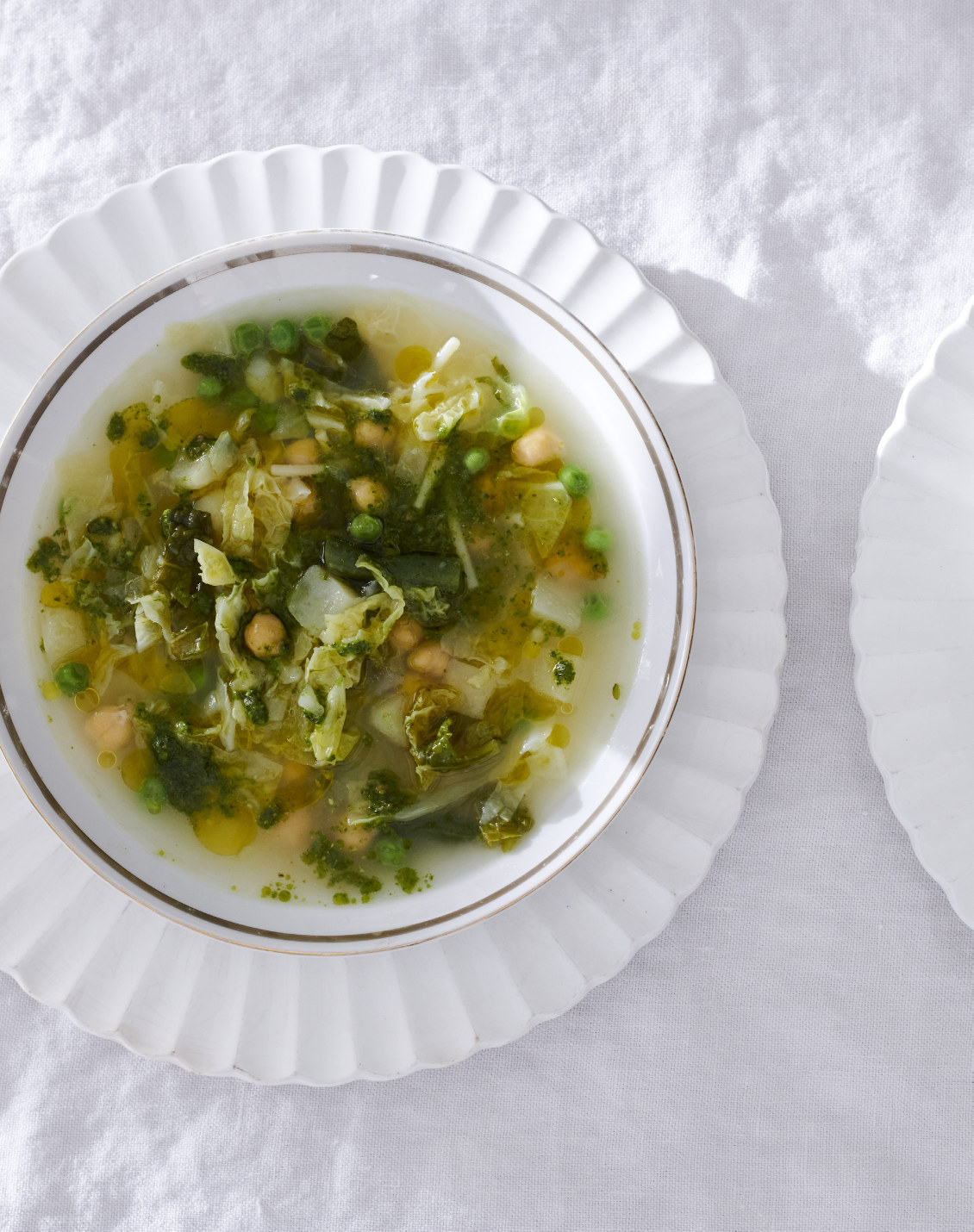
My grandmother’s minestrone soup is different from the homogenized tomato-red version. She used peas, beans, new potatoes, and herbs from her garden and topped the whole thing with a freshly pestled herb pesto. Whether they had just a tiny tenement plot or a backyard garden, most of the Italians who came to America in the great migration grew at least a few tomato or pepper plants and herbs, both for eating fresh in season and also to put up for winter. For this soup, mix and match your vegetables depending on what is in your own garden or at the farmers’ market. If you collect the cheese rinds from grating cheese, store them airtight in the fridge or freezer, and they will offer wonderful depth of flavor to vegetarian soups like this one. Preceded by a small antipasti plate of sliced meat and cheese and served with some crusty bread, a bowl of this minestrone makes a satisfying meal.
INGREDIENTS
For the soup
- 4 tablespoons (60 ml) extra virgin olive oil
- 12 ounces (340 g) green beans, ends trimmed and cut into 1-inch (2.5 cm) pieces
- 1 onion, chopped
- 3 garlic cloves, sliced
- 1 teaspoon kosher salt, or more to taste
- 1 small cabbage (1½ pounds/700 g), cored and thinly sliced
- 1 large or 3 small potatoes, peeled if desired, and diced
- A Parmesan or Romano cheese rind (optional)
- 1½ cups (260 g) cooked chickpeas or cannellini beans
- 1½ cups (250 g) green peas
- ½ teaspoon freshly ground black pepper
- 8 ounces (225 g) small macaroni or broken spaghetti, cooked and drained
For the pesto (makes 1/3 cup/70 g)
- 1 garlic clove
- ½ teaspoon kosher salt
- 3 tablespoons grated Parmesan or Romano cheese
- 2 tablespoons pine nuts or almonds
- 5 tablespoons (12 g) chopped fresh herb: basil, sage, or flat-leaf parsley, or a combination
- 3 to 4 tablespoons olive oil
DIRECTIONS
- Set a large pot over medium-high heat and swirl in 2 tablespoons of the olive oil. Add the green beans, onions, garlic, and salt and cook, stirring, until the green beans soften and the onions begin to turn golden, 4 to 5 minutes. Add the remaining 2 tablespoons olive oil and stir in the cabbage and potatoes. Add enough water to cover the vegetables by an inch (2.5 cm), then add the cheese rind, if using. Bring to a boil, cover, reduce the heat to low, and simmer until the potatoes are tender, 10 to 15 minutes.
- Uncover the pot and stir in the chickpeas, peas, more salt to taste if necessary, and the pepper. Simmer until the peas are tender, about 5 more minutes. Stir in the noodles, adding more water if needed for a soupy consistency.
- Meanwhile, make the pesto: Using a mortar and pestle or a food processor, mash or pulse the garlic and salt together. Blend in the cheese and nuts. Mix in the herbs. Blending with the pestle, or with the food processor running, slowly pour in the olive oil until the pesto reaches your desired consistency. Transfer the pesto to a small bowl (cover with a little more olive oil to prevent browning if not serving immediately).
- To serve, ladle the soup into warm bowls and drizzle some pesto over the top of each. (Store any leftover soup in labeled reusable containers in the fridge for up to 4 days or in the freezer up to 6 months.)
PANTRY
Need help with the ingredients? Check our pantry list:
cook's note
Freshly made pesto can be frozen: Put it in a freezer-safe container and cover it with a thin layer of olive oil. Seal, date, and freeze. The layer of olive oil helps preserve the green color. You can also freeze small amounts in an ice-cube tray. Once they are frozen, transfer the pesto cubes to a freezer bag and seal it. They will keep for up to 6 months, and you can just pull out cubes as needed. If you have a lot of basil in your garden, prepare a large batch of pesto with the fragrant fresh-picked leaves at the end of the growing season to have on hand for the cold months.